 705-560-2000
From yard to yard: moving a tree across Sudbury
Get Your Free Estimate
"*" indicates required fields
You’ve spent years watching it grow. You planted it, watered it, protected it through Sudbury winters—and now you’re moving. But what if leaving that tree behind doesn’t sit right with you? Good news: moving a tree across Sudbury can be done if you plan it carefully. It’s not the simplest part of your move, but for many people, it’s worth it. With the right prep and timing, even a decades-old beauty can settle into new soil and thrive. If you’ve already lined up the best movers in Sudbury, there’s no reason your favourite tree can’t come along for the ride too.
Can your tree survive the move?
Not every tree can handle being uprooted. Some species adapt well after transplanting, while others suffer long-term shock or even die. Size plays a major role. A small pine under five feet tall has a much higher survival rate than a 20-foot oak. Young trees adjust faster because their roots aren’t as deep or widespread. Age also matters. A ten-year-old tree might tolerate relocation, but a 50-year-old maple with an extensive root system could struggle or perish within the year. Residential movers in Sudbury ON have seen many people attempt to move mature trees and later regret not consulting an arborist first.
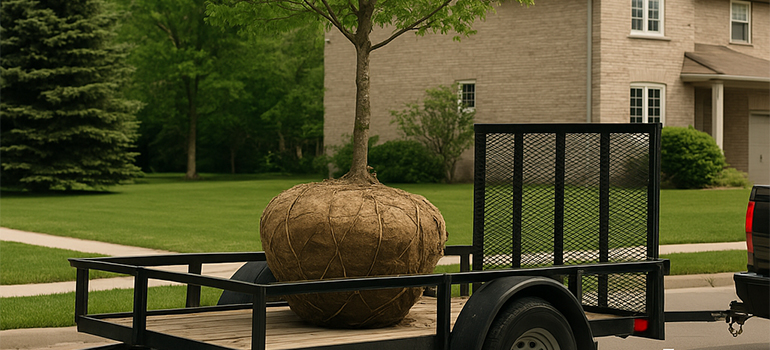
If your tree is native to Northern Ontario and under 10 feet tall, you’ll likely have a smoother transition. That said, any tree removal that involves large root balls or excavation near utility lines needs a proper plan and possibly a permit. Moving something that large may even require specialized lifting gear or cranes. The financial risk is real. A failed tree transplant can cost you $500 to $1,000 just in prep and equipment rental, with no guarantee of survival.
When is the best time to move your tree in Sudbury?
Timing can make or break your transplant. In Northern Ontario’s climate, you only get two good windows: early spring and early fall. Trees are dormant then. That dormancy helps them handle root disruption without going into full shock. Some moving services in Sudbury can handle tree transport depending on the size, but they’ll almost always suggest avoiding summer. Moving a tree across Sudbury in June or July stresses the tree, especially when temperatures hit 30°C and the soil dries out fast. Local frost dates also matter. The last frost usually ends by mid-May, and the first frost often arrives around early October.
You’ll want to schedule your move outside those risky periods. Frozen ground in winter is a non-starter—impossible to dig and dangerous for roots. The rainy weeks of April can help you prep the soil, and cooler air keeps transplant shock in check. Fall is also easier if you plan to pair the tree relocation with a full residential move. You’re not battling summer construction, high traffic, or school-year routines. Aim for a 2–3 week window where the tree can settle in before any major weather swings hit.
Do you need permission before you dig?
Digging up a tree in your yard might seem like your business, but Sudbury’s municipal bylaws can complicate things. If your tree is near a sidewalk, road, hydro line, or within shared condo land, you may need a permit to relocate it. Local movers in Sudbury say it’s smart to call Ontario One Call first to avoid striking underground wires or pipes. That service is free, and you’ll get markings for water, gas, and cable lines within three business days. You don’t want a backhoe tearing through your internet or worse, your natural gas line.

Tree protection laws also come into play. In some neighbourhoods, trees over a certain diameter are protected under local forestry ordinances. If the tree is native or rare, there may be limits on removal—even if you planted it yourself. Fines for unauthorized removal can exceed $500. In new subdivisions, tree ownership isn’t always clear, especially near lot lines. It’s worth checking your property survey and consulting with city staff.
How to prep your tree weeks in advance
Don’t wait until moving day to start prepping your tree. Transplants need conditioning, and it starts weeks—if not months—before moving your tree across Sudbury. Start with root pruning. Use a sharp spade to cut a circle around the base of the tree, about 10–12 inches out for every inch of trunk diameter. This controls root spread and helps the tree adjust to a smaller root ball. Long distance movers in Sudbury ON suggest starting this process at least 6 weeks before your move date. Water your tree deeply during this period—2 to 3 times per week if there’s no rain. You’re encouraging the growth of compact, feeder roots close to the trunk.
Mark the tree’s orientation before digging. Trees adapt to light, and rotating them at the new location can stress them further. Use a ribbon or chalk to mark the north-facing side. If your move overlaps with a dry spell, set up a drip hose or soaker line to keep roots cool. Fertilizer is not your friend here—it can promote growth right when the tree should be focusing on root recovery. Once the roots are pruned and hydrated, the tree will be in far better shape to handle what comes next.
How deep and wide should you dig?
Once your prep work is done, it’s time to dig—but not blindly. The size of the root ball matters. For small trees, the rule of thumb is 10–12 inches of root ball diameter per inch of trunk thickness. That means a 2-inch-thick trunk needs at least a 24-inch-wide root ball. International movers in Sudbury ON advise that if you’re coming from another country and plan to bring a tree along, prepare for soil type differences and shipping weight limits. In most residential moves, you’re digging by hand or with a small excavator. Expect a root ball depth of 12 to 18 inches. Wrap the root ball immediately after digging using burlap.
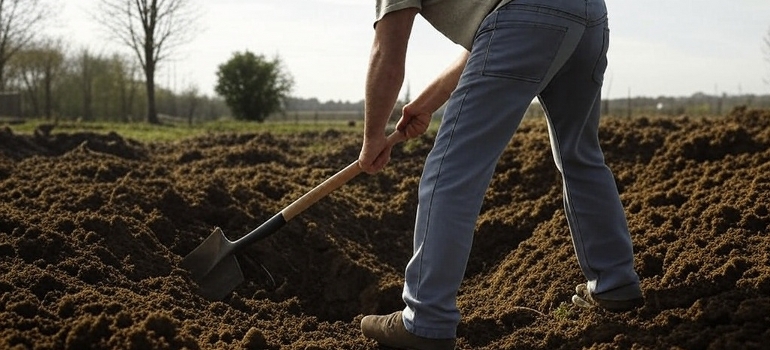
Keep the burlap moist so it doesn’t draw water away from the roots. Tarp the top to prevent sun exposure. It’s also wise to use wooden slats or a wheelbarrow with padding to move the root ball across your yard. For larger trees, your root ball could weigh 200 to 400 pounds or more. Improper lifting can crack the root system or strain your back. Secure the tree trunk during transport using padded straps, not rope, which can dig into bark and cause long-term damage.
What equipment will you need?
Basic tree relocation doesn’t need a full landscaping crew, but you will need the right tools. Expect to spend $100 to $250 at a hardware store or garden center to get what you need. Packers and movers in Sudbury recommend a pointed spade for root pruning, bypass loppers for branch trimming, a shovel, burlap, a tarp, and twine. A garden dolly or hand truck can help with heavier trees. You’ll also want wooden stakes and tree ties for replanting. If you already own gardening gear, your costs may be lower. But don’t skip on quality materials—cheap twine or a dull shovel can lead to poor cuts and longer dig times.
Consider renting a soil auger or post-hole digger if you’re replanting on rocky or clay-heavy ground. Sudbury soil tends to be mixed, and you may hit tough layers after 12 inches. Keep mulch on hand for post-planting insulation. A 3-inch layer helps hold moisture and suppresses weeds around the root zone. You may also want a couple of large buckets or bins for transporting loose soil from the original site to the new one, especially if you plan to match soil conditions for a smoother adjustment.
How do you load and move the tree?
Tree transport requires patience and good technique. Avoid dragging the root ball across the ground—it can break fine roots and lead to drying. Furniture movers in Sudbury often suggest using moving blankets or thick padding when transporting anything with delicate surfaces, and trees are no exception. Place padding around the trunk and branches before loading. A dolly with a wide base is ideal for wheeling the root ball to your trailer or truck. If you’re using a pickup truck, position the tree diagonally with the root ball toward the cab for stability. Secure it with ratchet straps around the base and mid-trunk.
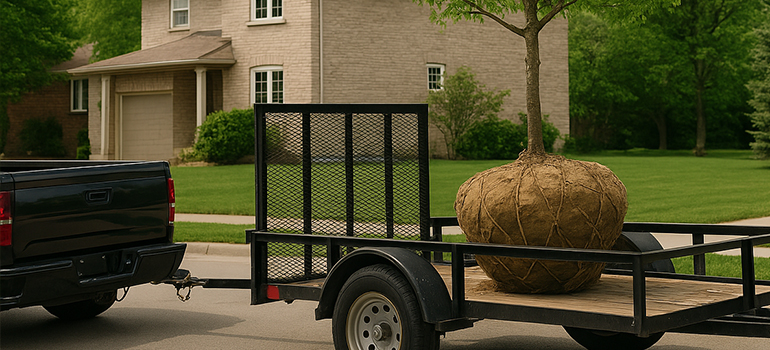
Leave room for airflow but limit bouncing by bracing with boxes or foam padding. For taller trees, check Sudbury’s load-height regulations—anything over 13.5 feet may be flagged during transport. Plan for low-speed travel, especially if you’re going from one neighbourhood to another. Avoid major potholes, which can jar the root system and break delicate feeder roots. Keep a spray bottle or damp towel around the root ball during the ride if temps exceed 25°C. Never leave the tree in the vehicle overnight. Unload and replant within the same day whenever possible.
Where should you replant the tree?
Your tree won’t thrive in just any patch of soil. You need to match conditions as closely as possible to its original site. Neighborhood microclimates can vary, especially near Ramsey Lake or the Copper Cliff area. If tall buildings shade your old home and your new one sits wide open, your tree may burn. So, check sunlight exposure before moving a tree across Sudbury. A tree used to morning sun and afternoon shade shouldn’t be dumped into full-sun all day. Drainage is next. Dig a test hole 12 inches deep and fill it with water. If it hasn’t drained after one hour, the soil may be too heavy or compacted for healthy roots.
You may need to amend the soil or dig a wider planting area. Soil pH also matters—Sudbury’s native soil can be acidic, which helps spruces but hurts some maples. Space is another concern. Keep your tree at least 10 feet from fences, driveways, or decks to avoid future root damage. Position the tree so the previously marked side faces north again. That keeps its sun-exposure pattern intact. Water thoroughly after replanting and pack the soil firmly to eliminate air pockets.
How do you care for your tree after the move?
This is where many tree moves succeed or fail. After transplanting, your tree goes into stress mode. It needs consistent care for at least 8 to 12 weeks. Set up a watering schedule immediately, especially if you’re relocating from a drier area. Saturate the root zone every 3 to 5 days, allowing time for the soil to dry slightly between sessions. Don’t rely on rainfall alone—Sudbury’s precipitation patterns can be unpredictable. Stake the tree if it’s taller than 6 feet or in a windy location. Use flat ties that won’t dig into the bark, and plan to remove them after one growing season.

Mulch around the base in a doughnut shape to keep moisture in but avoid piling it against the trunk. Watch for yellowing leaves, premature leaf drop, or stunted growth—these are signs of transplant shock. If you see any of them, reduce sun exposure using a shade cloth or provide temporary windbreaks. Avoid pruning during this period unless you see dead or broken branches.
When should you get help from professionals?
There’s a limit to what you can do with DIY tools and weekend energy. For trees over 15 feet tall, buried near utility lines, or in restricted areas, expert help may be required. Reach out for guidance if you’re unsure about root depth, soil chemistry, or lifting strategy. Large tree moves often involve cranes, hydraulic spades, and permits. Trying to muscle a 500-pound root ball yourself can lead to serious injury or tree death. Arborists can assess viability, prep roots, and ensure clean cuts that heal properly.
They also know how to avoid soil compaction and where to replant for optimal airflow. If your tree has sentimental or financial value—like rare ornamentals or commemorative plantings—it’s worth protecting that investment. Professional tree transport typically costs $500 to $2,000, depending on size, access, and distance. While it’s a cost, it’s cheaper than replacing a tree that dies within months of a rough DIY move. Peace of mind also goes a long way during a hectic relocation process.
Bringing life with you: final thoughts on moving a tree across Sudbury
Some things are worth the extra work. If the tree has been part of your life, leaving it behind might not feel right. Moving a tree across Sudbury takes planning, the right timing, and serious care—but it’s doable. Once replanted, that tree can keep growing in new soil, giving you something familiar to come home to. Stick with the process, watch it closely, and let it adjust. You’ll know it was the right call when you see new leaves push through.


Hired to move my parents. Asked for 2 movers (3 showed up!) and all were friendly, polite, and incredibly hard working. Very careful with fragile items and more then competent with big, heavy furniture.
f Hongell